
Nostalgia on demand
#2026isthenew2016 was the first viral social media trend of the year. But its recipe for success is old news.

Note: There are many pressing issues in the U.S. right now—what occurred in Minnesota high among them. For those interested in some of my analysis on what transpired in Minneapolis, I was interviewed (along with several experts) by The Christian Science Monitor for a recent story on the subject. I’ve decided to continue with this previously-planned article as scheduled, as sometimes amid the chaos, some levity and media literacy can go a long way. -JS
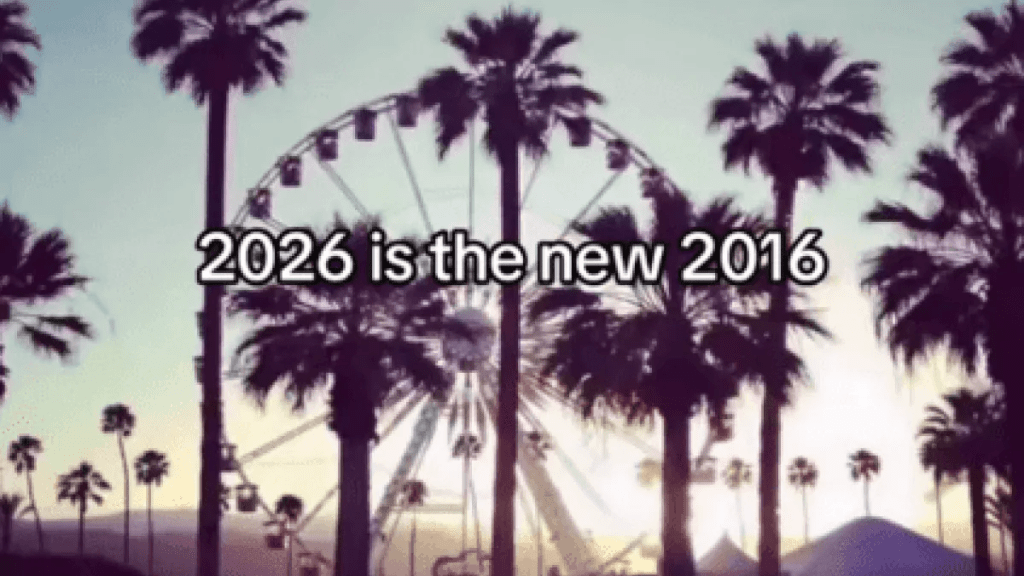
If you used social media in January, you may have encountered the 2016 trend. The trend asserted that “2026 is the new 2016,” and involved users posting photographs from 10 years ago with a short caption about what was going on in their lives at the time. Personally, I’ve seen people post about prior jobs, prior significant others, or their life prior to having kids. Celebrities and influencers have participated and parody accounts have mocked the trend.
As is often the case with such memes—the word meme in this instance being used broadly to signify an idea or behavior that spreads through social networks, forging a shared cultural experience and carrying with it a broader societal commentary—it’s not clear how this trend began. The website knowyourmeme.com cites as possible origins a post on the sub-Reddit “GenZ” (i.e., Generation Z, those born between 1997 and 2012); an Instagram post by Boots UK, England’s largest pharmacy; or an article in the student newspaper of Antioch Community High School in Antioch, Illinois. Each of these appeared in October 2025 claiming that 2026 would be the “new 2016.” Each was linked to a pop culture or entertainment release:
The GenZ sub-Redditor cited the 2026 releases of the video games Grand Theft Auto and Battlefield, both of which also had releases in 2016;
The Boots UK campaign was a promotion for Kylie Jenner’s upcoming cosmetics line, apparently a 10-year re-launch of her 2016 cosmetic line;
The Antioch High School newspaper cited the bookending of Netflix’s Stranger Things (debuted in 2016, ending in 2026) and Justin Bieber releasing an album (he released one in 2016 and has one planned for 2026) as further proof that “echoes of that era are resurfacing.”
(As an aside, apparently the single year of 2016 is now considered an “era” in some corners of the Internet. We have the Mesozoic Era, followed by the Paleozoic Era, and, finally, the 2016 Era.)
Snark aside, the proliferation of this trend—estimates are that in January the hashtag #2016 spiked on TikTok by more than 450%; searches on Snapchat for “2016” lenses were up 613%, and posts featuring 2016 fashion and trends achieved 3x higher engagement on Instagram—evinces how nostalgia continues to be a reliable genre of viral social media content. As I wrote in the introduction to History, Disrupted, even as social media evolves and new platforms come and go, the forms of e-history that achieve the highest visibility online stay remarkably consistent year-after-year. “Nostalgia on demand,” as I’ve termed it, is one of them, an online phenomenon that dates at least to the late 2000s, if not earlier. (Nostalgia as a human emotion, of course, dates back far longer. Thomas Dodman, who was a fellow at the Library of Congress when I worked there, wrote an excellent book on the history of nostalgia.)
On-demand nostalgia packages moments from the past into micro-doses of sentiment in order to gain visibility in our feeds. The primary objective of any e-history is visibility, and e-history packaged as on-demand nostalgia has proven over 20 years to be a highly effective conceit for capturing attention, stopping people from scrolling, evoking an emotion and inducing a click, like, share or comment. It does this by offering the user an instantly-gratifying and satisfying jolt of sentiment that provides a “good-enough” understanding of a past event or phenomenon. In other words, on-demand nostalgia is not interested in serious history, i.e., a critical examination of past events that relies on multiple strands of evidence to form a well-researched conclusion. Instead, it is selling us “historical emotions”—feelings about the past—regardless of whether those feelings are grounded in any reality. As such, because it invokes a passing feeling as opposed to a critical thought, such content continues to be effective, powerful, shareable, and—in some cases—quite profitable.
In this particular case, the feelings that the 2016 trend has invoked are almost absurdly removed from the reality of how the year 2016 was experienced. Readers might be old enough to remember that, at the time, The New Yorker pegged 2016 as the “worst year ever,” as did The Guardian and local news outlets in America such as Penn Live (which services the U.S. state of Pennsylvania). Among the reasons cited were the ongoing war in Syria, climate change, Zika virus, Brexit, the election of Donald Trump, mass shootings, disinformation on social media, vapid super hero movies and the deaths of Prince and David Bowie. The notion that this confluence of events would rank as the worst year ever was also mocked contemporaneously by various writers who felt it paled in comparison to, say, 1349, when The Black Death killed millions of people across Europe. In other words, that the year 2016 was the worst year ever was, itself, a meme in 2016, appropriately parodied and mocked by the people who lived through it.
Ten years later across the social Web, the year 2016 has taken on a completely new valence. Among influencers participating in the trend, and in puff pieces opining on the trend published by the Today Show and NBC News, the prevailing sentiments have been that 2016 was somehow an “iconic year” when life felt more “carefree.” Two particular talking points recur over-and-over: that 2016 was a time when social media was less algorithmically driven and less business-oriented; and that 2016 was one of the last “normal” years before the Covid-19 pandemic upended life as we knew it.
As it pertains to the first claim, not much could be further from reality. Social media was, beyond a doubt, already a corporate, algorithmically-driven, money-printing enterprise by 2016. Instagram itself, where the current #2016 trend has flourished, already had 400 million users in 2015, with corporations spending over $1 billion on influence marketing by 2017. Facebook generated $27 billion in revenue in 2016, and Twitter, of course, was already valued at more than $1 billion and was the epicenter of global politics and information wars. To say that social media was carefree and innocent ten years ago is akin to saying that fossil fuels were cleaner and better for the planet a decade ago. The only way such a claim could make sense was if it was filtered through the eyes of a person so young s/he could not have known any better. It would be like my grandmother saying that there was no antisemitism in Europe when she was a child, only because she wasn’t old enough to understand that it was all around her.
The second claim is equally curious, a sentiment that 2016 was somehow that last “normal” year before the Covid-19 pandemic changed everything. This mirrors a sentiment I heard from university students when I was director of the Lepage Center from 2017-2020; that their college years had been overshadowed by the Trump presidency and a global pandemic, and as such they were deprived a “normal” college experience. The implication in both lamentations seems to be that starting in 2017 with the first Trump administration and then in 2020 with the pandemic, life had become unmoored from its safe harbor, never to be re-anchored. The year 2016, thus, becomes emblematic of a rupture point in the timeline, the moment from which things diverged and never returned.
Such a sentiment was actually brilliantly predicted in 2016 by a cartoonist mocking such future nostalgia. As the cartoonist illustrated at the time, “I’m sure we’ll look back on 2016 and think to ourselves ‘remember the year before the [insert terrible thing here] happened!’” Sure enough, ten years later, the trend on social media is to look back at 2016 and nostalgize it as the year before social media became too corporate, the year before the news cycle became so crazy, the year before everything became unpredictable, and the year before the world stopped being so carefree. Not to mention it was the year of Kylie Jenner, Justin Bieber and Grand Theft Auto.
One thing that was different in 2016 as compared to 2026 was the lack of consumer-facing artificial intelligence applications. In 2016, A.I. was largely confined to private labs and research papers. Ten years later, of course, it has proliferated widely. Data collected from social media has been one of the principal drivers of A.I., so in 2026 it is reasonable to wonder whether this trend is being harvested—or perhaps was even initiated—in order to collect training data for artificial intelligence purposes. In other words, one of the wonders of A.I. is its ability to take a photograph of a human being and either age him/her ten years, or de-age him/her ten years. To do so would require millions of examples of human faces aged over ten-year-periods. Is it so inconceivable that the 2016 / 2026 social media campaign has been a ruse to collect millions of examples of people’s faces ten years apart, in order to train some current or future A.I. application? If so, that would also bear some similarity to 2016; in that year, tens of thousands of people took a personality quiz on Facebook, the data from which, along with their contacts, was harvested and sold to Cambridge Analytica, who used it to tailor psychographic advertising during Brexit and the U.S. Presidential election.
It is precisely because of scandals such as Cambridge Analytica, as well as the public discourse around artificial intelligence, that a cultural critic such as myself might have thought that social media users would be more wary of a nostalgic trend in 2026 than they were in 2016. Judging by the statistics, that does not appear to have been the case.
The answer to why such trends continue to gain traction year-after-year points to another truism about social media over two decades: its incentive structures remain largely unchanged even as the features, news cycles, and hype machines come-and-go. The platforms reward visibility first and foremost; the more views you get, the more followers you can accumulate, the more interactions and comments you can stimulate, and the more influence you gain overall within the ecosystem. All social media platforms are selling us the promise of influence through visibility, and they reward content that achieves visibility, including nostalgia. As I detailed in History, Disrupted, this is by design. As early as 2010, Facebook was experimenting with features that would show us sentimental snapshots of our activity from prior years, and by 2012 tech companies were stating that social media provided “an untapped opportunity in the past.” Companies such as Facebook, FourSquare, Memento, Memolane and others all consciously made the past a centerpiece of their digital economies, selling us “historical emotions” as a means to keep us on the platforms for longer. Such is why it is so meta (pun intended) that a nostalgic trend, which incorrectly nostalgizes social media prior to it being commodified, has been trending on the platforms owned by the companies that commodified nostalgia for social media.
By this point, you may be thinking that this has been a lot of ink spilled (typed?) over a fairly benign social media trend that will soon become a passing footnote. So, if you take away anything from this missive, please remember the following three points:
The incentives of social media have not changed much in 20 years, despite the headlines, news cycles, new features and trends. Much of how social media works has remained consistent for two decades;
The forms of e-history that achieve visibility on social media have also not changed very much. “Nostalgia on demand” worked in the mid-2000s to achieve visibility and virality, and it continues to work in the mid-2020s, in large part because certain platforms have been built, over time, to privilege such content as a means of selling us “historical emotions” and keeping us engaged;
The images and data you post when participating in any trend, quiz, game or other application will almost certainly be used in ways you do not expect, probably to target you for advertising or to train an artificial intelligence application—or both.
Even when social web users recognize these realities, it remains likely we will still participate. Why? It’s fun. It stimulates emotions. It allows us to romanticize and glamorize our own lives into a tidy story of progress and evolution. It gives us a feeling of participating in a larger cultural phenomenon. And it offers the promise that if we hop on the right trend, we’ll “go viral” and be rewarded with widespread visibility and, maybe, even fame (temporary or permanent). As for who is ultimately responsible for making 2026 the new 2016? My bet is on Kylie Jenner and her cosmetics line. Given that the advertising for her campaign began in October 2025, and that she is one of the largest accounts on Instagram, with 391 million followers at time of writing—coupled with the resources at her disposal to launch a guerilla marketing campaign at scale across multiple platforms—I suspect the team attached to the re-release of her cosmetics line ultimately set this bandwagon into motion. Perhaps that is the true lesson of this meme: it is Kylie Jenner’s world, and we are all simply living in it.
Have a nostalgic week,
-JS
P.S. - As a run-up to this article, I experimented with a couple of nostalgic posts on Instagram: one from the Sundance Film Festival in 2023 and one from bowling at The White House in 2014.
If you’re new to this newsletter, you may have surmised that I wrote a bestselling book called “History, Disrupted: How Social Media & the World Wide Web Have Changed the Past.” Released in 2022, it continues to be quite relevant today. Consider giving it a read; it’s available on Amazon, Barnes & Noble, my publisher’s website, or it can be ordered through your favorite book store using the ISBN 9783030851163.
Thanks Jason. As a history educator I’m always looking at ways of getting cutting edge history like into high school classrooms.
As always, an interesting and timely analysis. I still think about insights found in your book. Thanks for it and for this article. That being said, whoever said "nostalgia is the gateway drug to history" does have a point. Nostalgia can be used to spark conversations about history.